Inspired on the Streets of Asia: Street Photography with Jim Karsh

by Louise Lakier
( May 20th, 2013 )

Jim Karsh, Bradley Olson, RMSP, Photographer, Pilot, Street Photography, Shoot from the Hip, Photography Tips, Travel Photography, Asia, People, Portraits, Documentary Photography


Photo credit @2010 Bradley Olson


I met Jim Karsh at the Rocky Mountain School of Photography. He was the loud mouth in class always giving us a good laugh. He also sold me my very first DSLR. His final project had most of our class in tears. We both share a love of broken down disintegrating buildings and things. His sports photography is pretty slick too. Over the past few years, he has been a constant source of inspiration. I have already tried out a few of these tips and I hope they will inspire you to hit the streets with your camera. You can find more of his images at jimkarshphotography.com

I’m a pilot for a U.S. airline and for the past 17 years I have flown international flights exclusively, mostly in Asia. Going overseas every month has given me the opportunity to satisfy my photography addiction by wandering in cities I might have never visited if not for my job. In doing that I have found that I most enjoy street photography, capturing the faces and ways of living that are quite different than what we are used to in America.

Jim Karsh, Bradley Olson, RMSP, Photographer, Pilot, Street Photography, Shoot from the Hip, Photography Tips, Travel Photography, Asia, People, Portraits, Documentary Photography


The first task I undertake when going to a foreign place with my camera is research. Bangkok, for example, is a huge city. I may be able to get good shots just by leaving my hotel and wandering at random, but with only one day to shoot on most layovers, I don’t want to waste time on a fishing expedition. The internet is a great resource for information on places to photograph and I make liberal use of Google Earth to scope out areas that may produce good photos.

Jim Karsh, Bradley Olson, RMSP, Photographer, Pilot, Street Photography, Shoot from the Hip, Photography Tips, Travel Photography, Asia, People, Portraits, Documentary Photography

The other preparation I recommend is to be familiar with your camera. Opportunities in street photography are sometimes fleeting, here one moment and gone the next, so you want to make use of all your tools to get the shot before it goes away. Know your autofocus modes, how to shoot in aperture and manual modes, and how to use autobracketing and auto ISO.

When you’re in the area where you want to shoot, be patient. If you find a compelling background, stick around for awhile and see who or what happens by. When you move, move slowly and pay attention. A compelling image may be a few steps down an alley or just inside an open door.

Jim Karsh, Bradley Olson, RMSP, Photographer, Pilot, Street Photography, Shoot from the Hip, Photography Tips, Travel Photography, Asia, People, Portraits, Documentary Photography

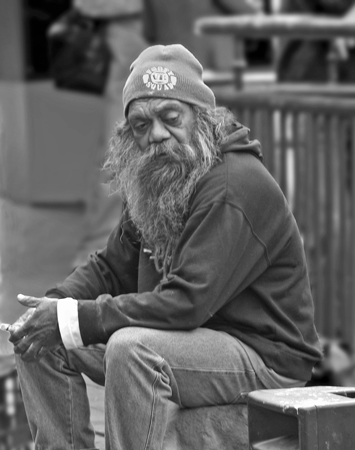
Of course, most of the best street photos include people, a fact which raises the question, what is the best way to approach a person and get a great photo? Should I ask or not? Even after shooting in a number of Asian cities, this is a question I don’t have a definitive answer for and I go with what seems right at the time. One thing I have learned is as a foreigner in a local area, you have already more than your share of attention and when you bring a camera to your face, every eye in the vicinity will turn to you. So I’ve learned to shoot from my hip or chest or with the camera on a table or other surface and I’ve gotten excellent pictures that way.

Jim Karsh, Bradley Olson, RMSP, Photographer, Pilot, Street Photography, Shoot from the Hip, Photography Tips, Travel Photography, Asia, People, Portraits, Documentary Photography


If there is a subject whose attention is fully trained on me, trying to sneak a shot is pretty futile and may bring anger instead of acceptance, so I find the best approach for me is to learn “hello” and “thank you” in the local language and approach with a smile. Pantomiming a shot always gets your request across and if I get a no, I walk away. More often than not, I get a yes if I approach with a hello, a smile and a compliment with hand signals on how interesting the person’s face looks, and I often get a thank you if I show the resulting image on my camera’s LCD.

Jim Karsh, Bradley Olson, RMSP, Photographer, Pilot, Street Photography, Shoot from the Hip, Photography Tips, Travel Photography, Asia, People, Portraits, Documentary Photography


There is a famous photographic axiom, “f/8 and be there,” and in street photography you’ve got to get out and shoot. The images won’t come to you as they would as if you owned a studio. You’ve got to go out and get them. One of the best shooting experiences of my photographic life happened because I overcame a huge desire to stay in a warm hotel room instead of going out in a cold windy Shanghai with sore feet to shoot. I forced myself to go and had a magical day and got some of the best images I had ever taken.

Jim Karsh, Bradley Olson, RMSP, Photographer, Pilot, Street Photography, Shoot from the Hip, Photography Tips, Travel Photography, Asia, People, Portraits, Documentary Photography


The last bit of advice is if you want unique images, get out of the normal tourist spots and go into areas where the locals are and where “real life” in that city is happening. Be safe, but a local market or artisan working on the street is much more interesting to me than the gazillionth photo of the Eiffel Tower.

To sum up, know your camera, research the city you want to shoot, learn a few local phrases, wear a smile and a positive attitude, take your time, be patient and most of all, BE THERE.


Jim Karsh, Bradley Olson, RMSP, Photographer, Pilot, Street Photography, Shoot from the Hip, Photography Tips, Travel Photography, Asia, People, Portraits, Documentary Photography


About the Images


1. While walking through a crowded market on the street by Wat Mahathat in Bangkok, I stepped into a restaurant because it was an open front and the inside looked interesting to me. This man came over waving his arms and talking animatedly and with a big smile, welcoming to the restaurant. When he realized that I was there only for a photograph his attitude changed completely, but he allowed the photo and stayed still while I took it, but it was apparent he wasn’t happy about it.


2. This was also in Shanghai and this man was reading the paper in front of his store. I loved the way his face was lit and started taking pictures. He looked up at me briefly but didn’t seem to mind that I was taking pictures and went on reading his paper.


3. On a trip to Manila I visited Payatas, this girl sat behind the bars on the front of her house and looked at me impassively while I photographed her. She never moved anything other than her eyes and never said anything to me.


4. I was wandering in the alleyways in an old neighborhood of Shanghai and passed this gent sitting in a doorway. I had the camera down by my side and snapped a few pictures as I stood near him. The light is very diffused and soft in these alleys making for good conditions for this kind of photography.

5. In Payatas, the mother of all garbage dumps, I walked through a neighborhood where squatters make their living by sorting through garbage from the dump. This little boy stood frozen against the wall of a small store while I took his picture several times. Shortly after I took this he burst into tears and ran down the street to his mother, crying at the top of his lungs.

6. In a Shanghai street market, this man was chopping up fish on a board on the ground. I took several shots of him doing that but didn’t like them much. Then he stood up and with the camera at my chest I took one shot, which I liked much better than the other ones.

7. This lady was working in a ticket window that also sold gifts at a shrine in Nagoya, Japan. I don’t speak much Japanese and she didn’t speak much English but she sat in the shadows of the office and held out the little rabbit doll and managed to make me understand that it was for luck.

Add a comment
 

My Number One Travel Tip & The Day I met the Sapote Fruit

by Louise Lakier
( May 17th, 2013 )

Sapote Fruit, Mamey Sapote, Travel, Food, Food Photography, Travel Advice, Central America, Granada, Nicaragua, Pudding, Dessert, Delicious

Stay with the locals. It is sort of obvious. You traveled a long distance to go somewhere else. You wanted a change of pace and a new experience. Stay with the locals. The people that look like you that come from the same place, lead similar lifestyles and create microcosms of where they come from here, the things you were wanting to get away from, won’t share the magic with you. Not because they are holding out, but because they don’t know it. There will be shared experiences of course, of travel, of frustrations, of challenges, of life in paradise. But the magic, the windows into a different way of life, won’t be opened for you. Language barriers needn’t stop you. If you are learning the language, immersion is the best way to practice. If you aren’t, it is the perfect place to start.

Today I was introduced to the Mamey Sapote Fruit. I was sitting down to lunch and noticed a vibrant smooth fruit with a hard shell on Dona Gloria’s plate. What is that? I asked. And so she shared a slice or two. I wasn’t prepared for such heavenliness. The sweet smooth flavors melted on my tongue. I swore I just ate pudding made from condensed milk, apricots, and peaches, whipped smooth and chilled for a few hours. And the shell, while easy enough to slice, is a naturally built in bowl. Mother nature just continues to floor me with her ingenuity. I am grateful to Dona Gloria for introducing me to the Sapote Fruit, another delight amongst the bountiful bounty for tasting here in Nicaragua.

How much happier could my taste buds be? Living in a country where Cacao, Coffee, and the Mamey Sapote fruit does grow.

Sapote-2

Add a comment
 

Inspired in San Francisco: Do you knit? Then KNIT BIG with Julie Weatherston

by Louise Lakier
( May 14th, 2013 )

Julie Weatherston, BIG, Knitting, Big Knitting, Creative, Crafts, Weaving, Fabric, Artist, Blankets, Woven, Wood Dowels, San Francisco Artist, Joyce Oudkerk Pool, Documentary PhotographyPhoto © 2013 Joyce Oudkerk Pool


I know Julie Weatherston from back in the day in Detroit, meaning….... High School. I would say we reconnected via Facebook and found a common thread, so to speak, by ‘loving’ and ‘liking’ and appreciating knitted inanimate objects in public spaces, like this one in Seattle. When I visited her a year ago now in the Bay Area, I learned about her love of weaving and knitting. Then more recently, I enjoyed her posts about the evolution and creation of her BIG knitting needles. It was quite impressive to see the outcome.

How long have you been knitting/weaving and which came first?

I’ve been knitting for 38 years ever since my grandmother taught me the basics of knitting when I was six years old.  I took up weaving much more recently though I had been intrigued by it for years. I was first introduced to SAORI style weaving (weaving without intention or weaving from the heart) in my twenties when I was working as an intern for Very Special Arts in DC.  The beautiful colors and freedom of this weaving philosophy (no mistakes) stuck with me over the years and for my fortieth birthday I treated myself to a solo trip to Japan to the SAORI no-mori studio where I studied with the founder and her son.  I came home with a loom and have been weaving ever since.

Julie Weatherston, BIG, Knitting, Big Knitting, Creative, Crafts, Weaving, Fabric, Artist, Blankets, Woven, Wood Dowels, San Francisco Artist, Joyce Oudkerk Pool, Documentary PhotographyPhoto © 2013 Joyce Oudkerk Pool


Where did you learn about BIG knitting?


I am not sure where I found out about BIG knitting but my life has become increasingly busy with two children and work. When I finally had time to knit at night, I found knitting on anything smaller than a size 8 was tedious and following any kind of complicated pattern or color work felt like work. So I guess I just found myself more relaxed with larger needles. Eventually I was knitting mostly on what I
call “salad tossers” (size 50/25mm) and then I graduated to the bad boys I made myself (size VERY BIG).


What inspired you to start creating BIGGER woven fabrics?


I live in northern California where we use blankets year round. I have throw blankets in our bedrooms and in the living room. So there’s the practicality of this type of fabric (it makes great blankets) but I also love the yummy texture of the fabric you get with big needles. My kids especially like that you can poke your fingers and toes through it and massage them. And there’s no complicated pattern to follow with a garter stitch (knit every row) blanket. I know how to do pattern and color work. I certainly admire people who can stick with it. But at this point in my life I really appreciate simplicity.


Julie Weatherston, BIG, Knitting, Big Knitting, Creative, Crafts, Weaving, Fabric, Artist, Blankets, Woven, Wood Dowels, San Francisco Artist, Joyce Oudkerk Pool, Documentary PhotographyPhoto © 2013 Joyce Oudkerk Pool


How did you make the dowels and where do you find the ‘yarn’?


I made my first BIG needles out of a 1.5” X 8PVC piping that I had in my garage. I sawed it in half and then used candles to shape the tips that I then covered in duct tape. I like the challenge of figuring out how to make things work with what you have. They sound crazy but they actually worked well. My only complaint was they didn’t feel so good in my hands. I like wooden needles. Eventually I made my own out of wooden dowels. Again, I sawed a 1.25” X 8’ dowel in half and then used a disc sander to make the tips. Actually my friend,
Julia Turner, helped me with that part. She’s a jewelry designer in SF and a pro with the disc sander. She finished them in her studio.


For yarn, I “upcycle” cotton sheets. I dye them, then rip them into strips, connect them together and wind them into a ball. I’ve also
used jersey fabric as yarn. You have to cut jersey with scissors though which is time consuming but meditative too, as is ripping the cotton sheets into strips. Jersey makes for a much heavier fabric that becomes more difficult to knit as the blanket gets bigger. My son affectionately calls my first jersey blanket  (the green one in the photos) the “Three thousand pound” blanket. A friend suggested it could be a good therapeutic blanket. The weight of it and it’s soft texture immediately calms your body.


Julie Weatherston, BIG, Knitting, Big Knitting, Creative, Crafts, Weaving, Fabric, Artist, Blankets, Woven, Wood Dowels, San Francisco Artist, Joyce Oudkerk Pool, Documentary PhotographyPhoto © 2013 Joyce Oudkerk Pool


Do you have plans for this project to get BIGGER?


I’d love to do something more public with the knitting but I haven’t decided what yet. Maybe get a few other folks to knit BIG with me somewhere unexpected. I think when people see you doing something that stretches their idea of what is “normal” it helps make the world more interesting. People might not think about knitting like this unless they see it. Unfortunately the size of the needles isn’t conducive to sitting in a coffee shop where you’d be more visible. We’d need to be in a park or something.And I’d like to teach more people how to knit in general not only on BIG needles. I’ve taught many many people over the years to knit, many of whom are much better knitters than I am and who still enjoy the satisfaction of complicated pattern and color work! It seems like with all the electronic options today, people aren’t always exposed to making things with their hands but when they get a chance to try it they become mesmerized. Personally I can’t imagine life without knowing how to knit! I’m so grateful to my grandmother who showed me how all those years ago.


Thanks to Joyce Oudkerk Pool Photography for providing the beautiful imagery.


What would you make if you took up BIG knitting? I personally love the idea of a public art piece with a group of ladies (and why not men?) gathered outside enjoying the weather, the company, and the meditative motion of creating. And then donating the BIG, warm, cuddly, outcomes to a homeless shelter.

4 comments
 
Contact Us · About · WanderTales · Advertise · Bhutan Tours · WanderBlogs· WanderTips · WanderGear · Newsletter · WanderGallery · Buy Solo Book · Buy India Book · Book Reviews · Book Signings · Workshops · Speaking · Media · News · Images · Copyright & Privacy · Site Map