Advertise on Wanderlust and Lipstick

10 Ways to Travel Green Before You Leave Home

by travel with a purpose
( June 23rd, 2009 )

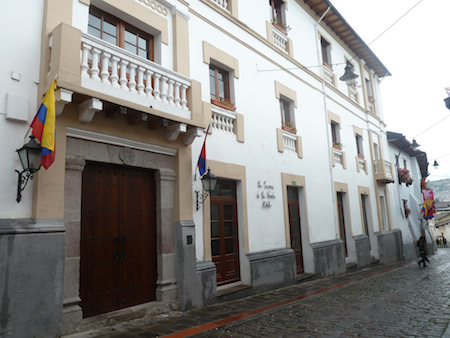
Front Door

Responsible travel starts at home, literally. Any savvy traveler can tell you that the journey starts long before you step out the door. Whether it be a weekend  or an extended international hiatus,  here are ten ways to start traveling green before you’re out the door.

1. Cut the paper trail

Paperless booking is no longer the way of the future, it is here now. When the International Air Transport Association switched to all paperless ticketing last year, (and their bookings comprise nearly 95% of international travel), they started saving an estimated 50,000 trees every year. Not only is e-ticketing saving resources, it can save you time and hassle as well at check-in.

2. Get disconnected

Before you head out, unplug ALL the appliances you can. All the things that power your home – televisions, blenders, tv’s, chargers, computers, toasters – are secretly sipping away at electricity. This “standby power” expenditure can really add up, both for your power bill and the environment.

3. Drop the plants off at the sitter

Instead of having a friend or relative drive over to your house to water your plants while you are gone, try finding a plant sitter who will allow you to bring the plants to their house instead. This will save fossil fuels and emissions for those plant-watering visits, and your plants are likely to receive better care that way, as your plant sitter will be less likely to over-water them.

4. Enter the digital age

Ditch bulky guidebooks and maps for digital downloads and podcasts to take on the road. Go Green Travel has a recommended list of paper-free guidebooks and our friends over at Transitions Abroad have picked their favorite travel podcasts.

5. Consider buying offsets


More and more people are budgeting in carbon offsets as a responsible way to reduce their environmental impact when traveling. You might also consider that direct flights, even though they may be a bit more expensive, always equal less total mileage and therefore less emissions.


6. Book wisely


With a plethora of sites like the Green Hotels Directory and Dine Green at your fingertips, a little time online can go a long way for finding sustainable restaurants, booking hotels with best practices and picking goods and services that benefit the community you’re visiting and keep your money local.


7. Go light


Packing the bare necessities is best for you and the planet. Trying packing a few days early, take a walk around your hood, then re-assessing what you have. I bet you’ll be able to find a few more cuts to your packing list.


8. Don’t forget the water bottleBikes and train


I won’t step up on the soap box again but, seriously people, making a plan and preparing to treat your own drinking water is one of the simplest ways to prepare for a far greener trip. Need a reminder? Click here.

9. Plan to hoof it

Walking, biking and using public transport are all great ways to enjoy a local’s view of a destination while leaving a gentler tread. Before you go, plan for biking and walking routes, and download local bus and train schedules so you’ll be ready to hit the ground…strolling.


10. Grab your brain and go forth with purpose


Keys – check. Passport – check. But don’t forget your brain! So many travelers hang up their responsible sensibilities and leave their eco-friendly habits at home. Everything you’ve adopted in your daily life – recycling, turning off the lights, saving water – should apply just as equally when you are away. Treat the world with the care you give your home and you will find yourself at home in the world.


Front door photo by Industry is Virtue


Bikes and train photo by Thomas Hawk


Add a comment
 

Review: mysmartpac personal care kit

by travel with a purpose
( June 8th, 2009 )

As I write this, I am pausing every few seconds and sniffing my arms up and down. Mmm…I smell delicious, albeit a little bit like dessert, thanks to the hydrating body lotion I just slathered on from mysmartpac.

This is one of the sweet little items out of the “hers” personal care kit by mysmartpac, which is a nifty packet of TSA-approved carry-on sized toiletry items that are all made of eco-friendly products.

Here’s what the women’s personal care kit contains (and my test-drive notes on each item):

Anti-oxidant face cleanser – for some reason I expected this stuff to foam up when I scrubbed my face, which it didn’t, but it did leave my face fresh and silky and was super-light, which I liked.

Anti-aging face cream – while I can’t attest to it’s anti-aging properties just yet, it was a nice light compliment to the face cleanser, which is important to me, as my skin is picky that way. I imagine this stuff would be a godsent at the end of a trans-atlantic flight.

Exhilarating body wash – unlike the face cleanser, this stuff foamed up nicely, and I found that a little went a long way. Exhilarating? Could be, after a long day of travel!

Hydrating body lotion – as mentioned before, it’s just plain yummy. (pause to smell arms again) Delicious.

Mint toothpaste/travel toothbrush – the toothpaste was okay, but it’s light mint flavor made me feel like it was scouring out the nasties the way my normal toothpaste does. The travel toothbrush was surprisingly well-made and not flimsy.

3 blade razor – not a top-of-the-line model, but again surprisingly sturdy and servicable

Hand wipes – a traveler’s best friend, along with hand sanitizer of course

Anti perspirant - being a longtime user of liquid roll-on varities, it felt kind of icky to drag the white stick across my pits. I will say this though – the stuff worked, and had a strong but pleasant scent, which is something that can really come in handy when you’ve been a few extra hours/days between showers.

A sturdy but compact ziptop bag – holds everything and seemingly would contain any spills, should they occur

All their products are created with healthy ingredients, such as green tea, grape seed oil and sunflower oil. Mysmartpac does not test on animals and they use recyclable packaging that was manufactured with wind energy. They go into detail about why they chose the materials they did for all their packaging on their website, which I appreciate.

The mysmartpac kits come in sets for “him” or “her”, each offering a slightly different lineup of products. There are several different fragrance sets available – mine was “berry blossom vanilla” which I found to be much stronger, girlier sort of scent than I am used to in my toiletry products. In the end, I found that I was pleasantly surprised by the scent, although next time I’ll try something a little less fruity, such as the “asian lotus ginger” scent.

Mysmartpac’s personal care kit is not for a long trip, but with up to six uses, it’s perfect to get you through a long weekend away. A little self-pampering can go a long way when you are on the road.

Add a comment
 

Tailor-made Memories

by travel with a purpose
( May 27th, 2009 )

tibetan knot

On a hot tip from a friend, I brought one of my favorite pairs of jeans to India last year to be custom-embroidered by one of the local tailors. I chose the Tibetan knot design from one of the many they offered. (These tailors also could replicate any design you drew for them or photo you brought in – too cool!) Returning from my trek several days later, my pants were waiting for me, having been painstakingly hand-stitched.

As a little bonus, they even added a simple yin-yang symbol to patch a wayward hole in one the legs.yin yang

This very affordable souvenir has become a favorite of mine, and my hand-embroidered jeans always bring compliments. Best of all, it’s a great way to avoid buying yet another cheesy tourist t-shirt, shipped in from a foreign factory, and support the local artisans instead.

Many countries, especially in Asia, offer these sort of locally-customizable souvenirs. A good friend of mine spent several days in Bangkok working with a tailor to create a gorgeous custom-made suit. And a couple I know did the same thing for their wedding outfits—completely customized to their tastes and sewn to fit—at a fraction of the cost of traditional western wear. Do a little research before your next adventure and find out what the local artisans specialize in for a memorable and unique souvenir that supports the local economy.

Add a comment
 

Photo Friday: India by way of South America

by travel with a purpose
( May 15th, 2009 )

arequipa-courtyard

“India is here…with all its magic and mystery…its aromas, flavors and colors…”

While wandering the cobbled back alleys of Arequipa, Peru, I encountered this captivating scene, beckoning me to experience the flavors of India at Peru’s own Anuschka restaurant.

Wait a minute…the taste of India in the desert south of Peru?

As much as I love delving deeply into the local cuisine when traveling, I find it fascinating to dip now and then into the culinary cultural crossroads I find along the way.  It provides an interesting glimpse into the patterns of immigration and reminds me what a small world it is, after all.

The French occupation of Indochina means that today you can enjoy a nice crusty baguette or chocolate-drizzled crepe, as I did, in places such as Luang Prabang, Laos.

I’ve enjoyed an authentic (and out-of-this-world) Italian dinner one Christmas Eve in Chiang Mai, Thailand. The expat Italian owners had flown their extended family in from the motherland, and the wine and cheer was flowing.

High in the Andes of Peru, I had a beautiful plate of phad thai that would rival any other.

Cross-cultural cuisines also can present some interesting hybrids and local interpretations of international standards. At a Mexican restaurant in Thailand, for example, our chef substituted yogurt for sour cream on enchiladas. So successful was this pairing that I’ve adopted it as a standard practice!

Enjoy more travel photos at Delicious Baby’s Photo Friday.

3 comments
 

Sun Lover’s Reality Check

by travel with a purpose
( May 4th, 2009 )

woman tanning

As a sun-worshipper from a famously rainy part of the world, it takes an extreme amount of discipline for me to sun safely overseas. In honor of National Skin Cancer Awareness month, I’m in need of a sun-safety reality check!

Test your sun-safety IQ. The American Cancer Society has a 9 question sun-safety quiz to get a true grip on where your sun-safety knowledge level is at. Suffice to say, this dispelled a few urban legends for me – check it out.

Never leave home without good, natural sunscreen. Even though you can often buy it wherever you are traveling, bringing your own ensures the quality & protection level. If you have sensitive skin like I do, it also allows you to try it first and be sure you won’t break out in flaming red hives or something.

Two natural sunscreens I have used are All Terrain TerraSport SPF 30 and Kiss My Face’s Face Factor SPF30 2 oz.

The TerraSport sunscreen is my all-purpose, down-and-dirty play-all-day sunblock, as it’s designed to dry fast and stay long, and it contains zinc oxide, which provides the fullest spectrum of coverage. I also love that it’s PABA-free and not tested on animals.

The Kiss My Face sunscreen is formulated specially for face and neck, and it’s a godsent because it doesn’t make me break out in nasty zits the way greasy sunblock can. This stuff has nice ingredients like green tea extract and lineolic ester, which they claim actually helps fight wrinkles. It offers UVA and UVB protection (TerraSport does too), is 100% biodegradable and contains no gross chemicals.Aloe Vera

Turn to nature for after-sun care. There’s nothing like good old aloe vera to soothe sun-exposed skin. Even if you managed not to get burnt, an application of aloe vera after a day outside will help hydrate and restore your skin.  Aubrey Organics Pure Aloe Vera Gel contains no artificial thickeners and come in a recyclable container.

Use your head to protect your skin. Take the time to wade through the common misconceptions about sun exposure and learn the facts. Medline Plus recommends wearing an SPF of 15 or higher, staying out of the sun during the hottest times of the day, and wearing wraparound sunglasses that provide full UV-ray protection among it’s basic safety measures. The CDC also has a very informative page about sun exposure, tanning and burning.

Woman tanning photo by chente922

Aloe vera photo by Powerhouse Museum

Add a comment
 

World’s Top Green Wedding Destination

by travel with a purpose
( April 16th, 2009 )

3053556242_39d2de925b

Ahh, springtime. Couples holding hands, smooching under blossoming trees in the park. And nothing says “domestic partnership” like an economic recession.

Not long ago,  one of my best friends was planning an eco-friendly wedding, and I was along for the fascinating ride. Living vicariously through her was satisfying on many levels: the girly-girl in me liked the dress-selecting and vow-writing, the rebel in me loved the thrill of bucking nuptial traditions, and my inner pragmatist reveled in the many ways one could reduce both costs and waste by keeping things green.

During this time, I learned volumes about green weddings, including the big one on my Wanderluster’s mind: In all of the world, where is the most eco-friendly destination to hold a wedding?

The answer: your backyard.

(I mean that more figuratively than anything, although if you do hold your wedding in your literal backyard, you’ve got pretty much everyone beat!)

See, the mantra of the sustainability movement – “Keep it local” – holds very true here. The closer to home, the less people you will have traveling large distances, which makes for a smaller environmental footprint. Goods and services can be locally-sourced and delivered, furthering that effect. Bottom line: no matter how many solar panels that eco-resort in the Carribbean has, or how nice the composting toilets are on that organic farm in Tuscany, the planet will be far better served by the celebration of your union the closer you keep it to home. (Of course, Tuscans and Carribeaners are excluded from that last statement.)

The locally-staged wedding can be further greened with help from the plethora of websites on this topic:

  • Grist.org suggests streaming video of your event via the internet for far-flung friends and family
  • Among the Sierra Club’s recommendations are carbon offsets for your guests and listings for eco-friendly accommodations and green car rentals in your invitations
  • Need inspiration? The Offbeat Bride profiles real couples’ DIY nuptials

Photo by mitjamasvar

1 comment
 

Consider Your Water Footprint

by travel with a purpose
( April 8th, 2009 )

hotel fountainOkay, by now you’re familiar with the term “carbon footprint” -  the carbon emissions created as a result of your meanderings.Since we’re all in that mindset, here’s something new to consider – your “water footprint”. As you can probably guess, your water footprint simply measures the amount of water you consume while going about your daily life.

I recently came across a Water Footprint Calculator on H2O Conserve’s site, and used it to calculate how much water consumption we’re responsible for in my little household of two. Though our living quarters are small, one thing the calculator illustrated clearly was that the lack of low-flow faucets and shower heads in my place create a larger footprint than is necessary. (Note to self: talk with landlord about this, as well as yard waste/food scrap recycling). I did get bonus points for “letting it mellow”, however.

All this got me to thinking: how  are we about our water consumption while we travel? So much of the world is constantly plagued by drought, water quality issues and even facing challenges to accessing water at all, water conservation should be a top priority for any responsible traveler.

A few tips for globe stompers watching their water footprints:

  • Always follow the good water-saving habits you’ve established at home, such as turning off the water when brushing your teeth, even though you’ve stepped out of your normal routine.
  • Bring a couple of re-usable water bottles and treat your own drinking water, which is beneficial for a host of reasons.
  • Select hotels based on their environmental practices, including water conservation. Look for lodging where they use low-flow fixtures and toilets, natural cleaning products (much easier on local water sources), and find out what they are doing in regards to sanitation and waste water. Thumbs up to hotels using rain catchment or other eco-friendly systems.
  • Ask hotel staff not to launder your bedding and towels daily.
  • Avoid hotels with golf courses (water-suckers as well as run-off polluters!) and swimming pools.
  • Try taking shorter and/or less frequent showers so as not to be a drain on the local water supply. In hot areas, a swim at the lake or beach can be a refreshing alternative.

photo by Llima

Add a comment
 

No Translation Necessary

by travel with a purpose
( April 2nd, 2009 )

For most travelers, communication can be at times exhilarating, confusing, intimidating, moving, or hysterical. But it’s well worth the effort – as self-appointed ambassadors, we’re like the world leaders gathering at the G20 summit, seeking to reach across cultural divides to create a sense of global unity.

phrasebook

Consider these pointers for polishing your cross-cultural communication skills:

* A phrasebook, a little homework and a reality check *

The desire to communicate is primal in humans, and luckily there is a lot that can be said without words.

When we do endeavor to speak across the cultural gap, it’s important to recognize that communication style, tone, and nuance can vary greatly between cultures. In some languages, loud speaking tones denote anger; in others, it can mean enthusiasm. Word meanings can be loose and relative too: in India, a response of “yes” can mean “for sure”, “maybe” or even at times “probably not”. Do a little reading before you go an learn about the cultural norms, common gestures and taboos in communication.

One step towards becoming a great cross-cultural communicator is to give yourself a gut-check before submersing into a foreign culture. Ask yourself: what stereotypes or pre-conceived notions do I have about the people I am going to meet? It’s important to recognize these so that you can move beyond them and make authentic connections.

Finally, even in countries where I expect to encounter a large number of English speakers, I find a local phrasebook is a must-have, as explained here.

* Hit the ground walking *

So here you are, fresh off the bus in a tiny village, ready to hold your own G20 summit with the first local you encounter.

First a foremost, it’s best to proceed any attempt at speaking with a smile – a universal ice-breaker if ever there was one. Next, speak s-lo-w-l-y and clearly, so there is a better chance of being understood. (Don’t, however, think that volume somehow increases understanding – it only makes you sound obnoxious!)

Try and simplify your phrases if you are speaking with a non-native English speaker; deal with single questions or statements at a time, and avoid the slang or figures of speech that commonly pepper our phrases. If you need to, draw a picture or write out number to help illustrate your point.

Always be polite—it’s best to err on the side of more formal speech—and while joking is a world-wide salve, do keep in mind that your humor may be lost in translation.

* Go Deeper *

Be creative with the limits of your language barrier, bearing in mind that your genuine interest in communicating speaks volumes in itself. Topics such as family, friends, favorite past times, home life and food can be shared with minimal vocab.

A good conversation is equal parts listening and speaking: be sure to ask questions as well as sharing about your life. It’s also a great gesture to try and speak in both languages (English and the local parlance), and as a bonus you’re bound to pick up some local phrases.

Caution: sincere attempts at cross-cultural communication can lead to beautiful friendships and richer experiences!

Photo by ob1left

3 comments
 

Have Asana, Will Travel: Yoga on the Go

by travel with a purpose
( March 23rd, 2009 )

beach-yoga

Breathe in.
Breathe out.

Many of us have developed a yoga practice as a part of our normal routines, but find it often lapses when traveling. It may seem like a stretch (pun intended), but I don’t need to tell you that your commitment to yoga is not an ideal thing to leave at home!

The nice thing about taking yoga on the road is that it is something you can do almost anywhere, it does not require a lot of extra equipment, and best of all, it’s the perfect antidote to the stresses that can arise during transit. Also, seeking out yoga classes or practices in the places you visit provides a great opportunity to connect with people within the local community who you already share something in common with.

Here’s a few recommendations for staying in the flow:

Research

Before you go, check out the Yoga Journal Directory to locate teachers and studios, even internationally.

Want to take it a step further and have a yoga-focused trip? Gonomad has some recommendations for world yoga tours.

Pack

There’s tons of places on the internet to purchase travel yoga mats; one good site is Barefoot Yoga Company, who offer a large array of mats made from sustainable, eco-friendly materials.

Don’t want to shlepp a mat? Check out Yoga Paws which essentially are mini mats you wear on your hands and feet! Made from ecologically friendly material free of chloride, latex and PVC, their built-in linings offer extra support while absorbing sweat and dirt from the floor.

Grab a book for yoga-on-the-go tips and poses, such as Travel Yoga: Stretches for Planes, Trains, Automobiles, and More!

If there’s room in your luggage, Yoga Universe suggests you bring a couple of calming scents, such as candles and incense, as well as some of your favorite yoga practice music on your iPod, to help create a sacred space no matter where you are.

Practice

Check out Yogaxoga’s recommendations for yoga stretches to do during and after your flight.

Catching some waves? Brave New Traveler has a simple yoga routine for the beach.

Beach yoga photo: Jaylara

Add a comment
 

Southwest reduces waste, increases entertainment

by travel with a purpose
( March 17th, 2009 )

A friend passed this on to me today; an example of how Southwest Airlines’, the kid cousin of the skies, keeps things fresh:

Besides supporting the creative expressions of its crew, Southwest Airlines also recycles all cabin waste and was the first airline to use an entirely electronic ticketing system. Between their recycling and the electronic tickets they have applaudably scaled down their impacts.

2 comments
 
Contact Us · About · WanderTales · Advertise · Bhutan Tours · WanderBlogs· WanderTips · WanderGear · Newsletter · WanderGallery · Buy Solo Book · Buy India Book · Book Reviews · Book Signings · Workshops · Speaking · Media · News · Images · Copyright & Privacy · Site Map